📋 In This Guide
College textbooks cost the average student over $1,200 per year. But students who apply a few smart strategies consistently spend 60–80% less. Here's exactly how to do it.
A student spending $1,200/year on textbooks can realistically reduce that to $200–$400 by combining the strategies in this guide — saving $800+ per year.
Buy Smarter From Day One
The biggest mistake students make is buying textbooks before the semester starts. Many professors list required books that they rarely use — or use only 2–3 chapters from. Wait until the first week of class to confirm which books are actually necessary.
Wait for the First Class
Attend the first lecture before buying anything. Professors often reveal which books are truly required vs. optional. Some even provide PDFs of the chapters you'll actually need.
Buy Used, Not New
Used textbooks typically cost 40–60% less than new ones. A book with some highlighting is functionally identical to a pristine copy for studying purposes.
Check the Previous Edition
For many subjects — especially humanities, social sciences, and introductory courses — the previous edition is nearly identical to the current one and costs a fraction of the price. Ask your professor if the older edition is acceptable.
Renting vs. Buying: When Each Makes Sense
Renting is ideal for books you'll use for one semester and never reference again. Buying makes more sense for books in your major that you'll use across multiple courses or want to keep as references.
| Scenario | Best Option | Why |
|---|---|---|
| Gen-ed course, one semester | Rent | No future use, lower upfront cost |
| Major course, foundational text | Buy used + sell back | Resale value recovers most of the cost |
| Book with online access code | Buy new (if required) | Access codes can't be reused |
| Book available as PDF legally | Digital/library | Free or very low cost |
Sell Your Textbooks After the Semester
Recover up to 50% of your book costs. Free shipping, fast payment.
Free & Low-Cost Digital Alternatives
Before paying anything for a textbook, check these sources:
Library Genesis (libgen.rs) — Large database of academic texts.
OpenStax (openstax.org) — Free peer-reviewed textbooks for introductory courses.
Your campus library — Many libraries have course reserves with free 2-hour checkouts.
Interlibrary loan — Your library can borrow books from other institutions, often within days.
Sell Back Strategically to Recover Costs
The sell-back strategy is where students leave the most money on the table. Most students either forget to sell their books or wait too long. Here's the optimal approach:
Sell within 2 weeks of finishing your final exam. Textbook buyback prices drop significantly as the semester progresses and demand decreases. A book worth $45 in December may only fetch $28 in February.
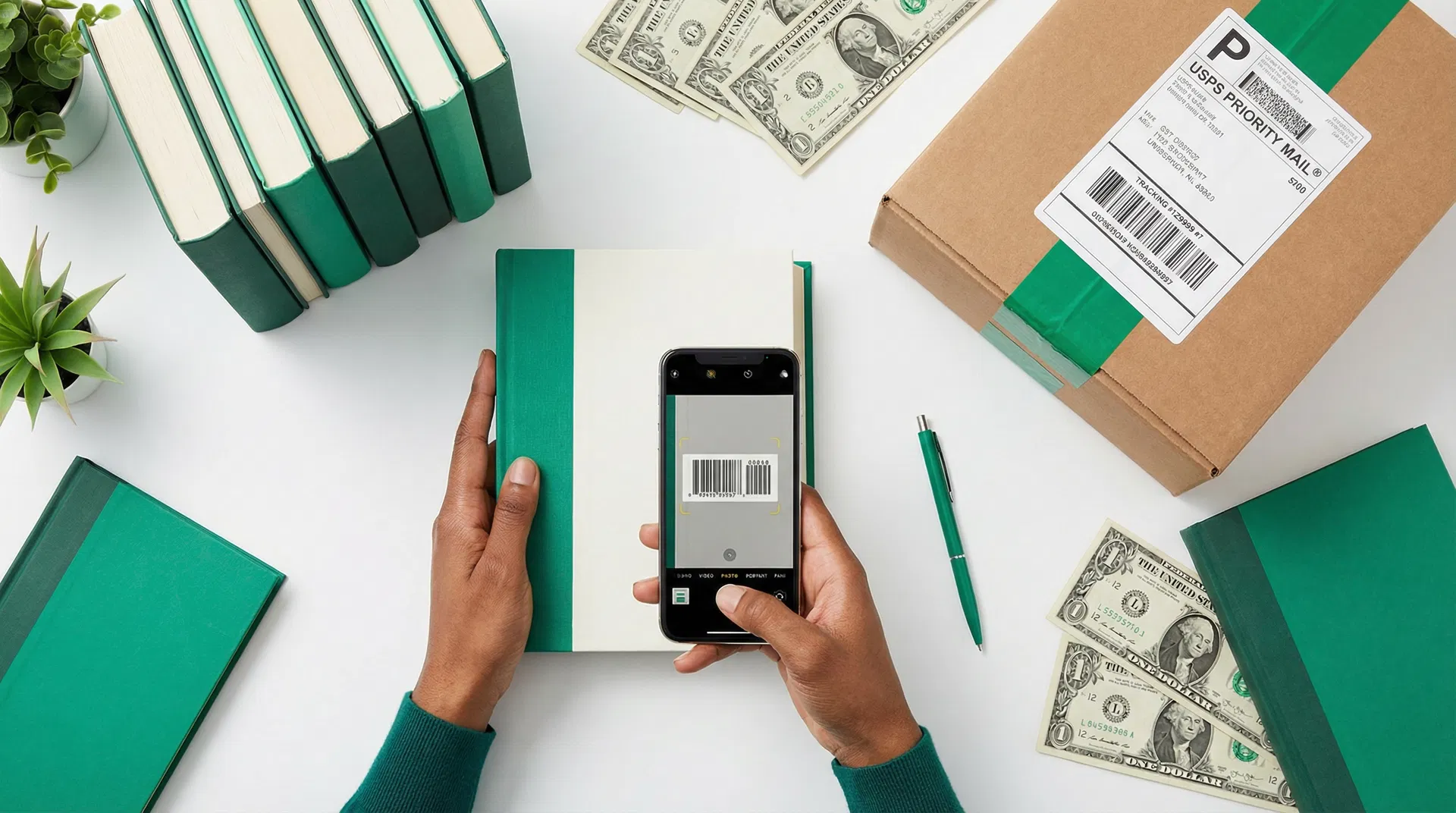
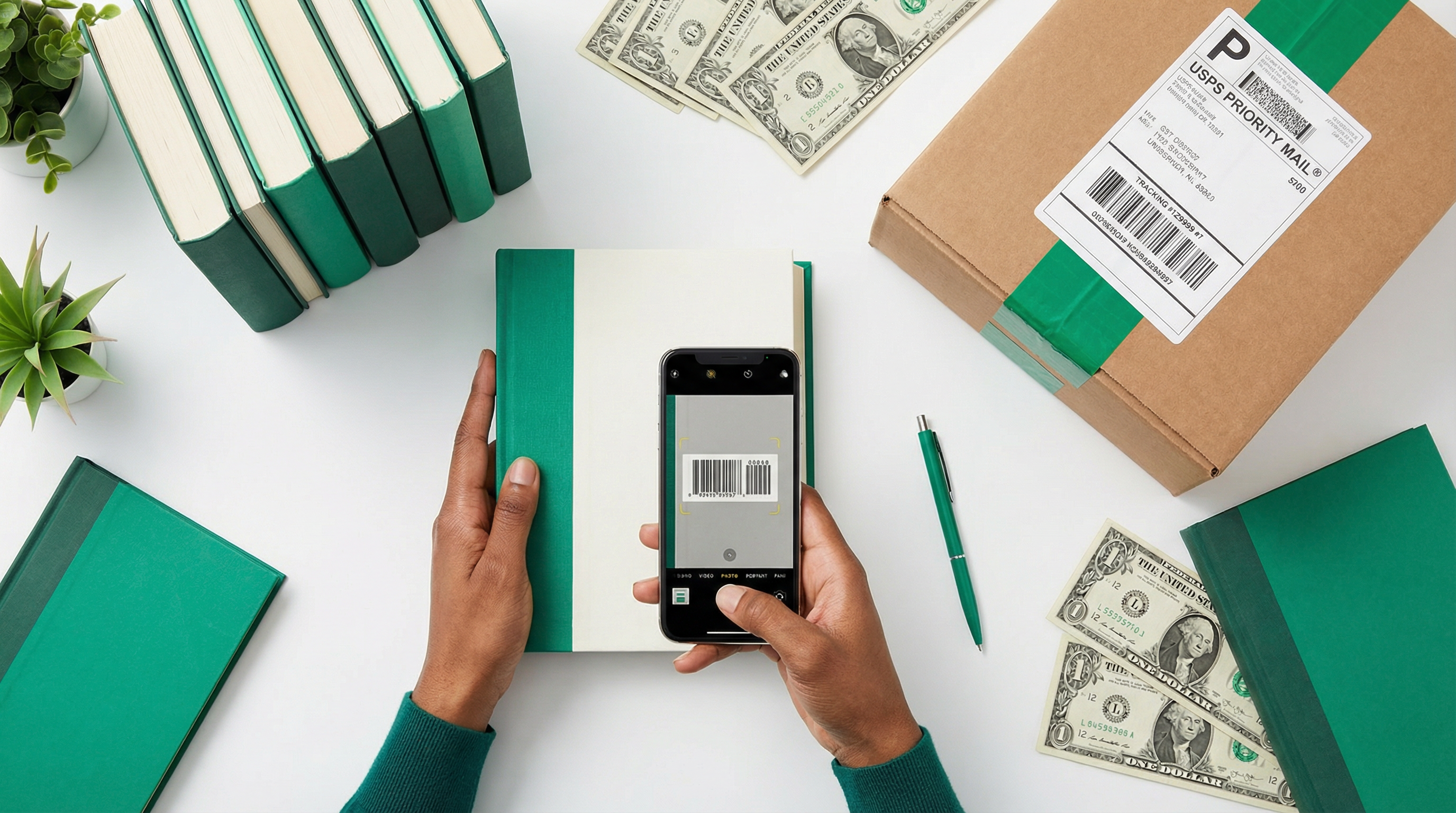
Use BookToCash to sell your books right after finals. The process takes under 5 minutes: scan the ISBN, get an instant quote, ship for free, and receive payment within 1–3 business days of delivery.
Your Semester Textbook Checklist
- ☐ Week before semester: List required books, check library availability
- ☐ First week of class: Confirm which books are truly needed before buying
- ☐ Before buying: Compare used prices, check previous edition, consider renting
- ☐ During semester: Keep books in good condition (no water damage, don't lose pages)
- ☐ Finals week: Start scanning ISBNs on BookToCash to check resale values
- ☐ Within 2 weeks of finals: Ship books for maximum payout