Deciding where to sell your used books can be as complex as a Dickens novel. For most sellers looking to offload common books quickly, book buyback sites like BookToCash pay more in 2026 once you factor in Amazon's hefty fees and the significant time investment required. However, for rare, collectible, or high-value books, the higher price potential on Amazon can make it the more profitable choice.
📋 In This Article
Selling on Amazon: A Deep Dive
Amazon is the world's largest bookstore, making it a go-to platform for many aspiring book flippers. It offers two primary selling methods: the Merchant-Fulfilled Network (MFN) and Fulfillment by Amazon (FBA). Each path has its own set of rules, fees, and potential rewards.
The Merchant-Fulfilled Network (MFN)
With MFN, you are in the driver's seat. You list your books on Amazon's marketplace, and when a sale is made, you are responsible for packing and shipping the book to the customer. This traditional e-commerce model gives you complete control over your inventory and fulfillment process.
MFN sellers have direct control over their pricing, shipping costs, and customer interactions. This can be a major advantage for those who want to build a brand and manage their own business operations.
Fulfillment by Amazon (FBA)
FBA is Amazon's all-in-one fulfillment service. You send your books to an Amazon warehouse, and they handle the rest: storage, packing, shipping, and even customer service. This convenience comes at a price, with a more complex fee structure than MFN.
A significant advantage of FBA is that your books become eligible for Amazon Prime, offering free two-day shipping to millions of customers. This can dramatically increase your sales velocity.
The Hidden Costs: Amazon's Fee Structure
While Amazon provides a massive audience, its fees can significantly eat into your profits. Understanding these costs is crucial before you list your first book.
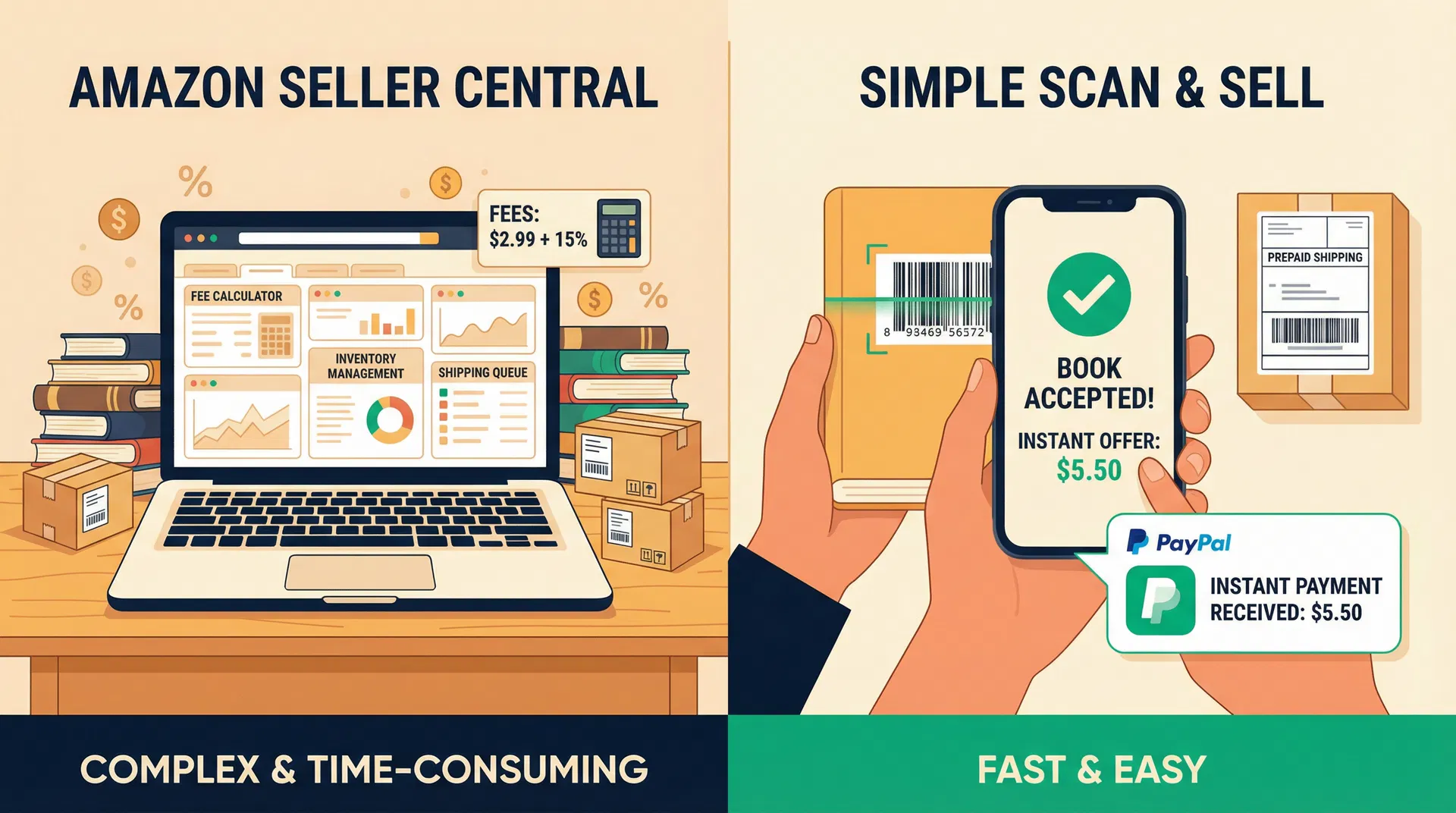
Amazon's primary fee is the **referral fee**, which is a steep 15% of the total sale price (including shipping). On top of that, FBA sellers face additional costs:
- Fulfillment Fees: Charged per unit, based on the book's size and weight.
- Monthly Storage Fees: Calculated based on the volume of your inventory in Amazon's warehouses.
- Long-Term Storage Fees: For books that sit in the warehouse for more than a year.
Let's not forget the 2026 fee increases. Amazon has announced an average FBA fee increase of $0.08 per unit, plus a 3.5% fuel and logistics surcharge. These small increments can add up, especially for sellers with large inventories.
Ready to Sell Your Books?
Get an instant quote on BookToCash and see how much you can earn today!
Get Your Quote →The Simpler Choice: Book Buyback Websites
If the complexity of Amazon's fees and fulfillment options seems daunting, book buyback websites offer a refreshingly simple alternative. Services like BookToCash, BookScouter, and BooksRun are designed for speed and convenience.
The process is straightforward:
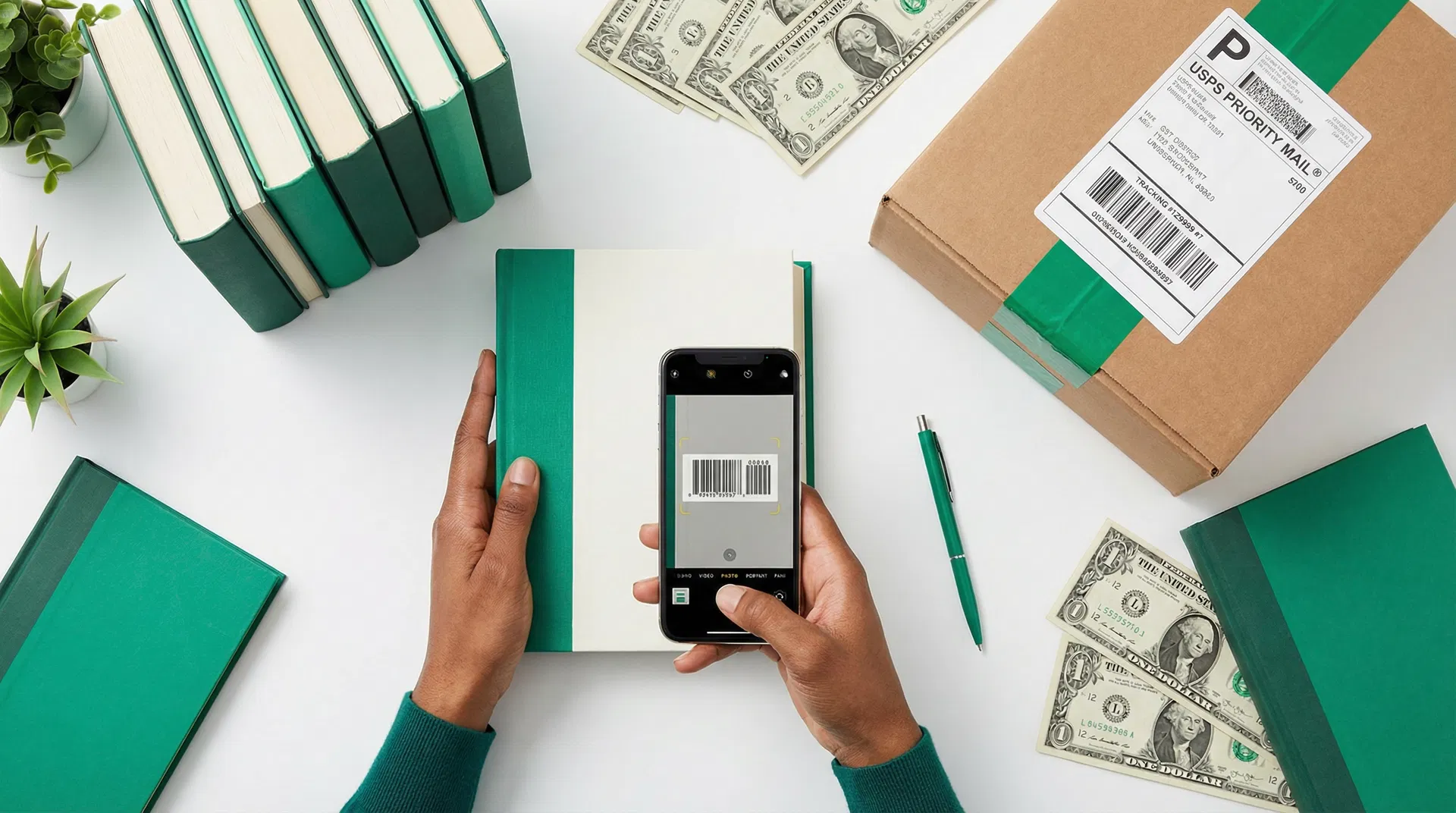
Enter Your ISBN
Simply type the ISBN of your book into the website's search bar.
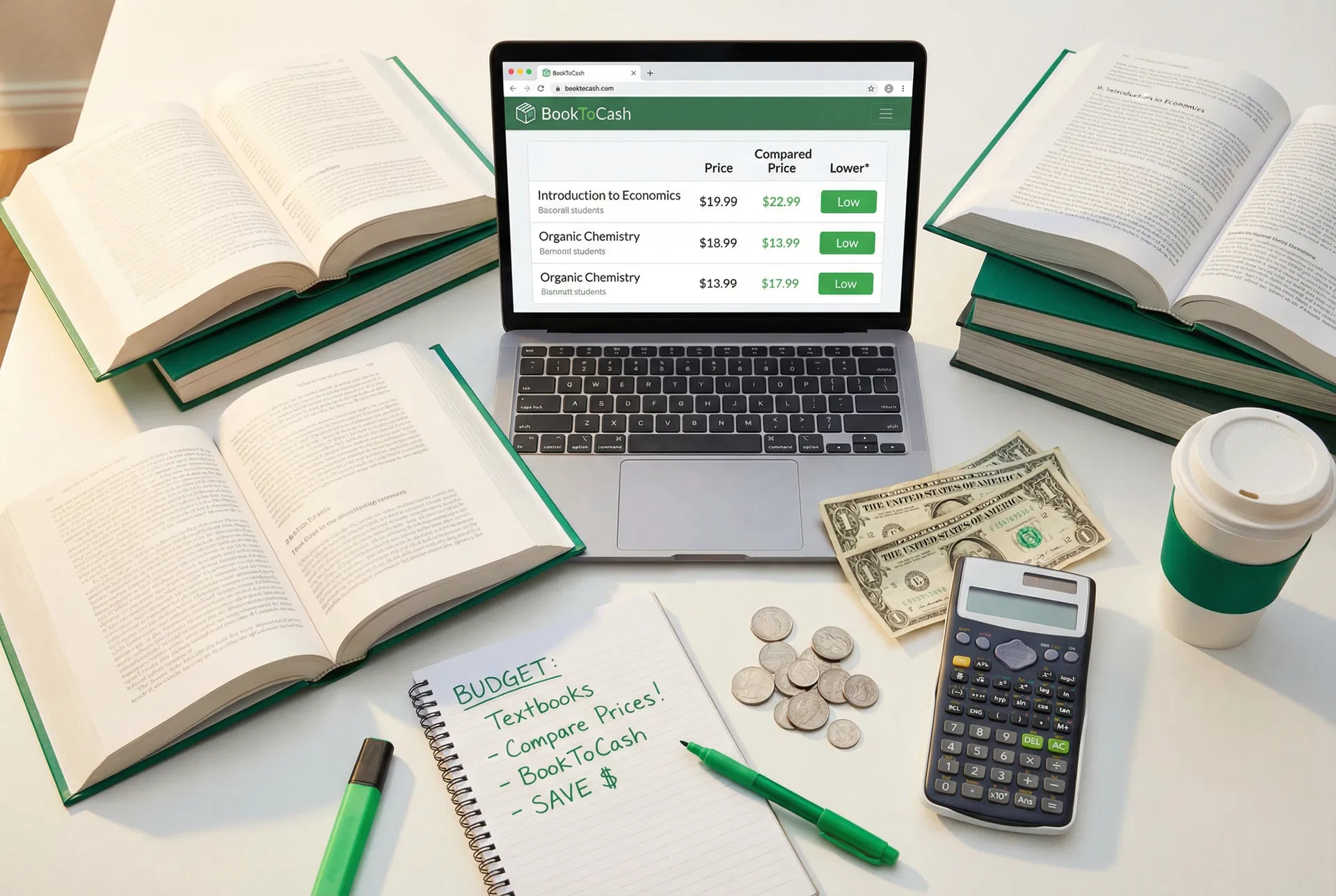
Get an Instant Quote
You'll receive an immediate offer for your book.
Ship for Free
Accept the offer, and you'll get a free, prepaid shipping label.
Get Paid
Once the buyback company receives and processes your books, you get paid via check or PayPal.
The beauty of buyback sites is the lack of effort required. There are no listings to create, no customers to deal with, and no trips to the post office. It's the fastest way to turn your unwanted books into cash.
Amazon vs. Buyback Sites: Head-to-Head Comparison
Let's break down the key differences between these two platforms in a simple table:
| Feature | Amazon (FBA/MFN) | Book Buyback Sites (e.g., BookToCash) |
|---|---|---|
| Payout Speed | After book sells and funds clear (weeks) | Within days of receiving your books |
| Fees | 15% referral fee + FBA/shipping costs | None (shipping is free) |
| Time Investment | High (listing, packing, shipping, customer service) | Low (just enter ISBNs and ship) |
| Shipping Hassle | You pack and ship (MFN) or prep for FBA | Free, prepaid shipping label provided |
| Pricing Control | Full control over your listing price | Fixed quote based on market demand |
| Best For | Rare, collectible, and high-value books | Bulk selling of common books, textbooks |
Making the Right Choice for Your Books
So, which platform should you choose? The answer depends entirely on your inventory and your goals.
When to Choose Amazon
Amazon is the clear winner for books with high individual value. If you have a first edition, a signed copy, or a sought-after textbook, you'll likely get a much better price by selling directly to a collector or student on Amazon. The platform's vast reach connects you with a global audience of potential buyers willing to pay a premium for the right book.
When to Choose a Buyback Site
For the average person with a stack of popular paperbacks or last semester's textbooks, a buyback site is the superior option. The time you would spend listing, packing, and shipping each book individually on Amazon would likely negate any small profit gains. With a service like BookToCash, you can get a fair price for your books in bulk, with minimal effort. It's the perfect solution for those who value their time as much as their money.
The Verdict: Maximize Your Earnings and Minimize Your Hassle
In the 2026 landscape of online book selling, there's a clear division. Amazon remains a powerful platform for professional sellers and those with high-value inventory. But for the everyday seller, the convenience, speed, and transparent pricing of buyback websites are a game-changer. By avoiding Amazon's complex fees and time-consuming process, you can often come out ahead. Before you commit to one platform, it's always wise to get a quote from a site like BookToCash to see what your books are worth.