
Reference
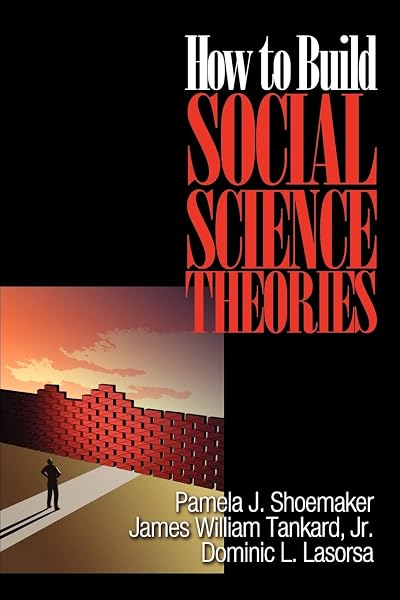
How to Build Social Science Theories
Pamela J. Shoemaker · James William Tankard · Dominic L. Lasorsa — SAGE Publications, Inc, 2003
$106.42
NewBrand new — unread and unmarked. How we grade
Free shipping within the US — ships from Richardson, TX within one business day. A person checks every copy before it ships.
2 copies of this book — from $106.42
About this book
As straightforward as its title, How to Build Social Science Theories sidesteps the well-traveled road of theoretical examination by demonstrating how new theories originate and how they are elaborated. Essential reading for students of social science research, this book traces theories from their most rudimentary building blocks (terminology and definitions) through multivariable theoretical statements, models, the role of creativity in theory building, and how theories are used and evaluated. Authors Pamela J. Shoemaker, James William Tankard, Jr., and Dominic L. Lasorsa intend to improve research in many areas of the social sciences by making research more theory-based and… Read more
As straightforward as its title, How to Build Social Science Theories sidesteps the well-traveled road of theoretical examination by demonstrating how new theories originate and how they are elaborated. Essential reading for students of social science research, this book traces theories from their most rudimentary building blocks (terminology and definitions) through multivariable theoretical statements, models, the role of creativity in theory building, and how theories are used and evaluated. Authors Pamela J. Shoemaker, James William Tankard, Jr., and Dominic L. Lasorsa intend to improve research in many areas of the social sciences by making research more theory-based and theory-oriented. The book begins with a discussion of concepts and their theoretical and operational definitions. It then proceeds to theoretical statements, including hypotheses, assumptions, and propositions. Theoretical statements need theoretical linkages and operational linkages; this discussion begins with bivariate relationships, as well as three-variable, four-variable, and further multivariate relationships. The authors also devote chapters to the creative component of theory-building and how to evaluate theories.
Details
- FormatPaperback
- PublisherSAGE Publications, Inc
- Published2003
- SubjectReference › Words, Language & Grammar
- Pages240
- LanguageEnglish
- ISBN-139780761926672
- ISBN-100761926674
From the same shelf
 Great Writing 4: Great Essays (Great Writing, New Edition)$6.66
 Juicy Pens, Thirsty Paper: Gifting the World with Your Words and Stories, and Creating the Time and Energy to Actually Do It$6.84
 The Interpersonal Communication Book (14th Edition)$8.99
 National Geographic Almanac of American History$8.99
Browse the shelf
Selling instead of buying? We buy textbooks like this one. Get a quote